Mayor of Three Agents using Conductor
Four hours as the lead engineer over a fleet of AI coding agents — and what actually broke.
Repo: github.com/Nicolas-Richard/uptime
I spent four hours orchestrating AI coding agents into shipping a multi-tenant uptime monitoring SaaS. I didn't write the code. I didn't write the plans either. What I did: brainstormed designs with a planning agent, answered its tradeoff questions, reviewed every diff, ran the smoke tests, resolved merge conflicts, and recreated worktrees each time the base branch moved between waves.
I drove the planning agent with Jesse Vincent's obra/superpowers skill pack. Its brainstorming → writing-plans → executing-plans flow produces specs and plans structured enough to hand to a worker agent without a babysitter — and that turned out to matter more than the orchestration glue. The skills feed sub-agents perfectly.
This post is about the workflow, the scars I picked up running it, and the architecture calls I'd defend with or without AI in the loop.
What got built
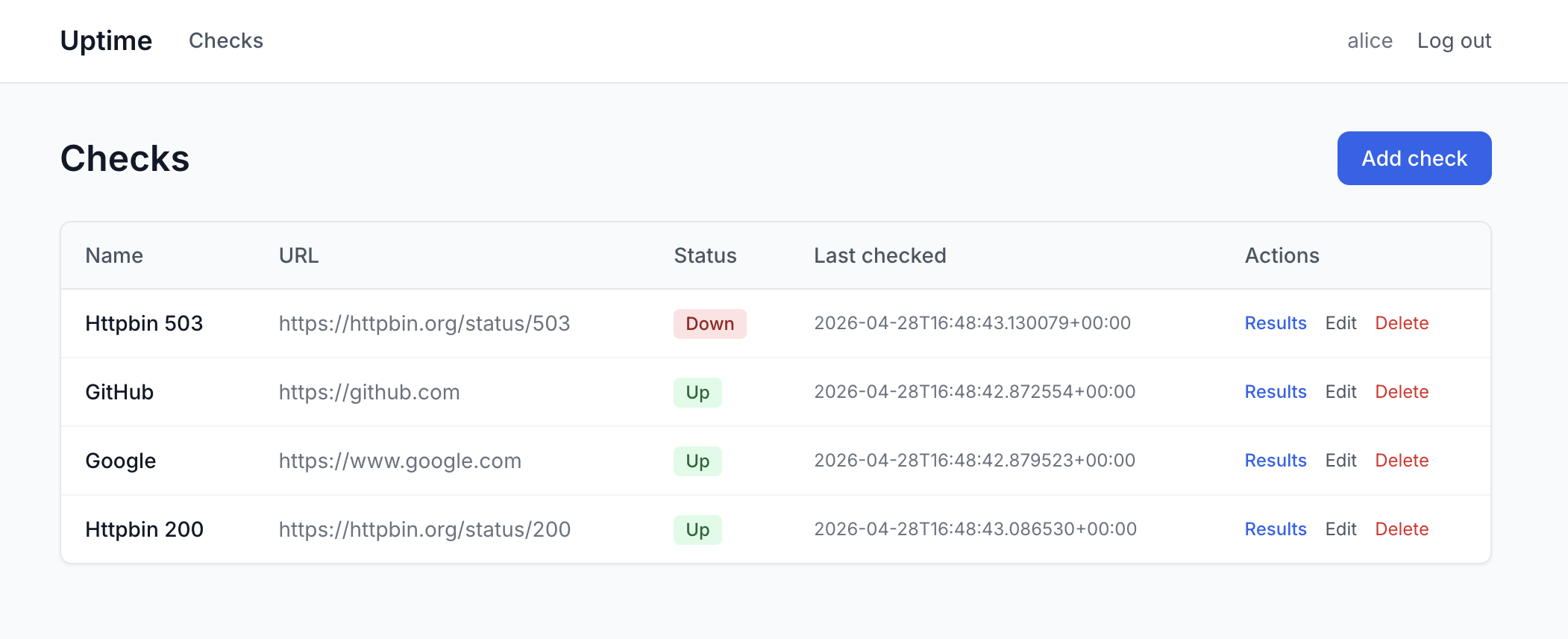
A small multi-tenant SaaS for HTTP uptime checks:
- A Django dashboard for organizations, members, and checks.
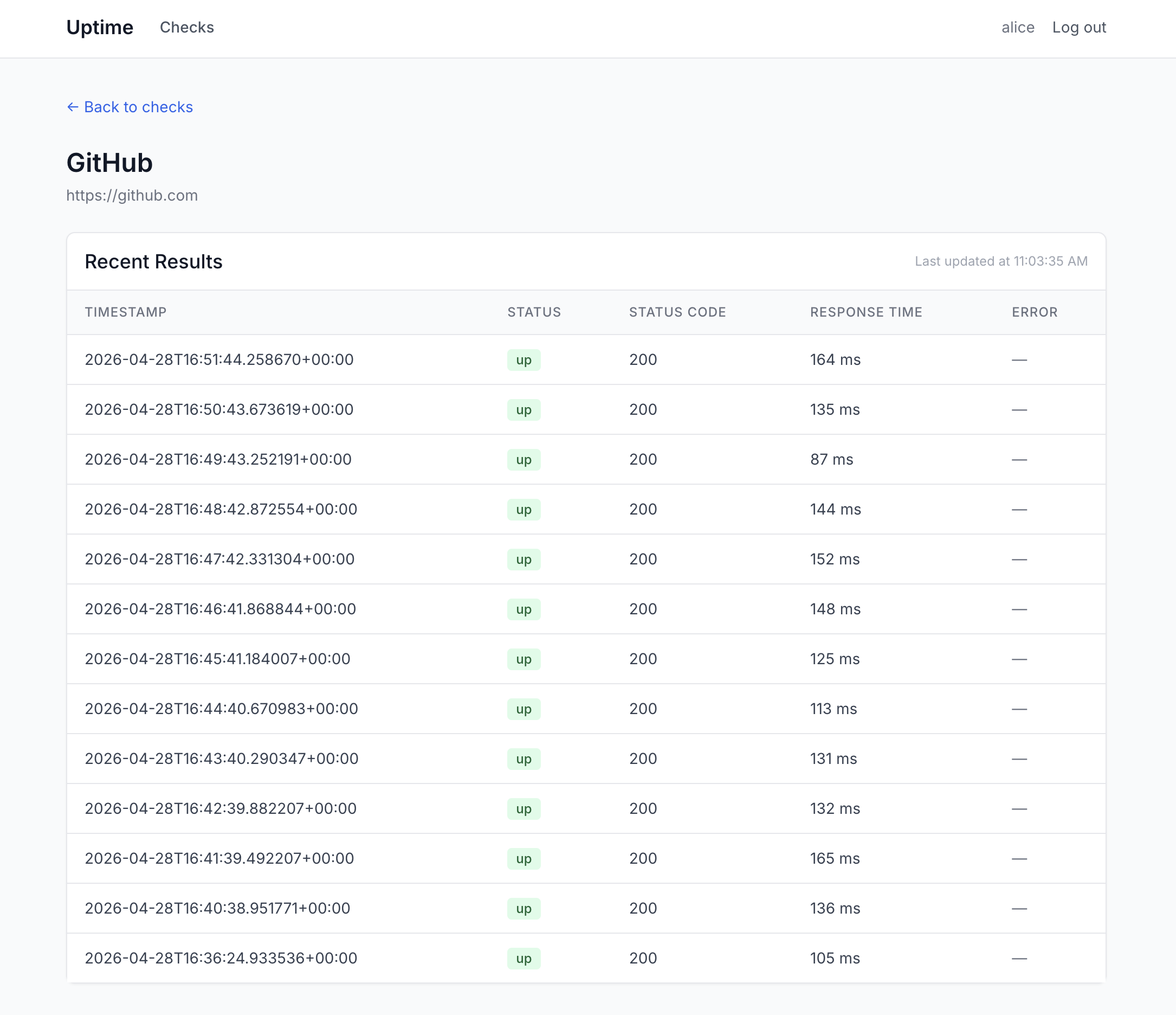
- One AWS Lambda that wakes up every minute on EventBridge, reads active checks from DynamoDB, runs them concurrently inside one
aiohttp.ClientSession, and writes results back. - Two DynamoDB tables —
checkspartitioned bytenant_id,resultsbycheck_id— with GSIs sized for the actual query patterns.
EventBridge ─(every 1m)─▶ Lambda ─▶ DynamoDB ◀─ Django dashboard
Multi-tenant from day one: every key path is scoped by tenant_id. No "we'll add isolation later."
The orchestration
The setup runs on Conductor — a Mac app that gives each agent its own git worktree on the same machine. The pattern is roughly the one Steve Yegge has been describing: one lead steering and reviewing, a fleet of agents typing. I called the lead role the "mayor."
Three plans came out of three brainstorm sessions:
| Sub-project | Tasks | Plan | Scope |
|---|---|---|---|
1-uptime-monitoring |
15 | 371 lines | Bootstrap, Django, DynamoDB, Lambda, local runner |
2-ui-landing |
8 | 178 lines | Tailwind base, auth, checks/results UI, landing |
3-security |
5 | 256 lines | Open redirect, SECRET_KEY guard, ALLOWED_HOSTS, Lambda timeout clamp |
Each independent subtask got its own worktree — over a dozen by the end. The payoff isn't just parallelism; it's auditability. Every worktree was committed separately, and the Conductor UI lets me click into each agent and replay exactly what it did. If a diff looks wrong, I can see whether the agent reasoned about the call or guessed.
Parallelism has a serial prelude
The temptation is to fan out fast. You can't dispatch parallel agents at infrastructure that doesn't exist yet.
The mayor wrote prompts that referenced infrastructure that didn't exist. Wave 2 prompts mentioned compose.yml and PORT_OFFSET before either was on disk. I caught it by reading one prompt against the actual repo before dispatching. Three workers in parallel all hitting "what compose file?" is a worse failure than admitting the work is serial.
There was no hello-world Django yet. Several of the "parallel" tasks quietly assumed a Django project that no one was actually creating — a hidden serial dependency dressed as parallelism. Someone has to scaffold the framework first; until that lands, fan-out is fiction.
The mayor made silent tooling choices. I noticed a stray uptime.egg-info/ and discovered the mayor had defaulted to pip because it's "ubiquitous." I asked twice why pip was involved before switching to uv — and egg-info regenerated even after the switch. Mayors quietly bake in opinionated defaults; review the foundation before agents fan out.
Wave 1 is unglamorous and unavoidable. Boilerplate, compose, base Django, package manager — I conducted the mayor through these serially, no workers, until the substrate was solid enough that fan-out wouldn't fall through the floor.
Worktrees are a coordination problem in disguise
The "look how parallel my agents are" demo skips this part. None of these are tool bugs — they're first-time-with-this-pattern gotchas, and each cost me real minutes:
- The dev stack has to run side-by-side, or the rest is theater. Three agents in three worktrees only works if their Django dev servers, DynamoDB Local instances, and ports don't collide. I threaded
PORT_OFFSETthrough the dev stack and pinned every endpoint to env vars before the first fan-out. Without it, "parallel agents" turns into agents fighting over port 8000. This was the load-bearing realization that made the rest of the pattern possible. - Worktrees branched off
mainbefore Wave 1 was merged. The three workspaces had almost nothing to work from. Fix: merge Wave 1 to main first, then recreate worktrees. Conductor worktrees snapshot at creation time; sequence matters. .context/is per-workspace and gitignored. The prompts the mayor "saved" lived in its own worktree, invisible to the worker worktrees. I copy-pasted prompts into each Conductor chat by hand. I was learning the mayor pattern in Conductor as I went; I haven't landed on the perfect workflow yet, but this friction tax is solvable — I just hadn't solved it on this run.- Repeated fast-forwards between waves to land worktrees on the right commit. Friction tax of the pattern.
- Two workers both edited
urls.pyandsettings.py. Even with careful partitioning, Django's registration files are a chokepoint. Hand-resolved. Identify shared-edit files upfront and either serialize them or pre-stub. - One worker crashed mid-wave. Agent C's worktree failed; the mayor did the work itself. Agents hang, crash, or produce nothing — plan for it.
- Style drift across agents. The checks service uses
boto3.resource; the Lambda handler usesboto3.client. Not a bug — the real cost of agents working in isolation. No one is the style cop unless I am.
Decisions I steered, not typed
Two calls I'd defend in any architecture review:
1. Single Lambda + asyncio over per-check fanout. The "scalable" reflex would be a dispatcher Lambda firing N invoker Lambdas. I picked one Lambda that runs all active checks concurrently inside a single aiohttp.ClientSession. Dramatically less infrastructure — one EventBridge rule, one IAM role, one cold start — and aiohttp gives you thousands of in-flight requests inside a single function.
2. tenant_id in DynamoDB partition keys and GSIs from day 1. checks is partitioned by tenant_id. The active-checks GSI is is_active + tenant_id. The results-by-tenant GSI is tenant_id + timestamp. Every dashboard read is Query, not Scan. Multi-tenant isolation is much harder to retrofit than to bake in.
Takeaway
This pattern works, and it works really well. Yes, there's a coordination tax that falls on the lead — spotting fictional prompts, recreating worktrees in the right order, hand-resolving merges in registration files no one knew were shared and some of these can be ironed out with a better workflow. Four hours of mayoring produced what would have taken me a week to type alone. This is genuinely amazing, and I'd be surprised if it isn't standard practice within a year.
The calls that actually shape the system — which Lambda pattern, when to be multi-tenant, how to keep three agents from colliding on the same laptop — are the same ones that mattered before AI. What changes is throughput: three of them get executed and arrive for review at roughly the same time, if you've done the serial prelude and can read a diff fast enough to keep up.